
How do your users think about your product?
Have you ever built a great solution to a real problem, but felt like the people you’re building it for don’t immediately ‘get it’?
When
- People who use your product love it, but
- It’s a huge effort to get them to try it,
Then
- You may have a positioning problem.
| ‘Positioning’ is how you want your users to think about your product. |
Done well, positioning instantly defines the unique value for a relevant audience.
- Who is it for? (Target segment)
- What does it do? (Pain + Solution)
- Why is it better than the alternatives? (Market + Differentiator)
What you build should resonate with the people you’re building it for. That’s something you can observe and measure. Qualitatively; do you get an ‘aha!’ moment in customer interactions, or do next steps feel labored? Quantitatively, are your target customers deciding to use your product fast and often once they hear about it (i.e. conversion %, time-to-conversion)?
Positioning is an internal process with a wide impact. In marketing, it’s deeply tied to product messaging (what the company says) (2). For product teams, it provides some key context when planning and making changes. Critically, good positioning comes from deep customer empathy, and product managers should have a sense of how users are thinking about the product vs how the company wants them to think about it, taking accountability for that alignment across each customer interaction.
The magic is that as a customer, good positioning shines through.
Compare: Calm vs Mindfulness Coach
Calm is a $2bn company with 4M paid subscribers.
Mindfulness coach is a US government program, with 1% the number of Android downloads.
There are massive differences in their setup, funding and incentives. But they are talking to some of the same people, helping solve some of the same problems. The stark contrast here makes it easy to learn from the difference in positioning.
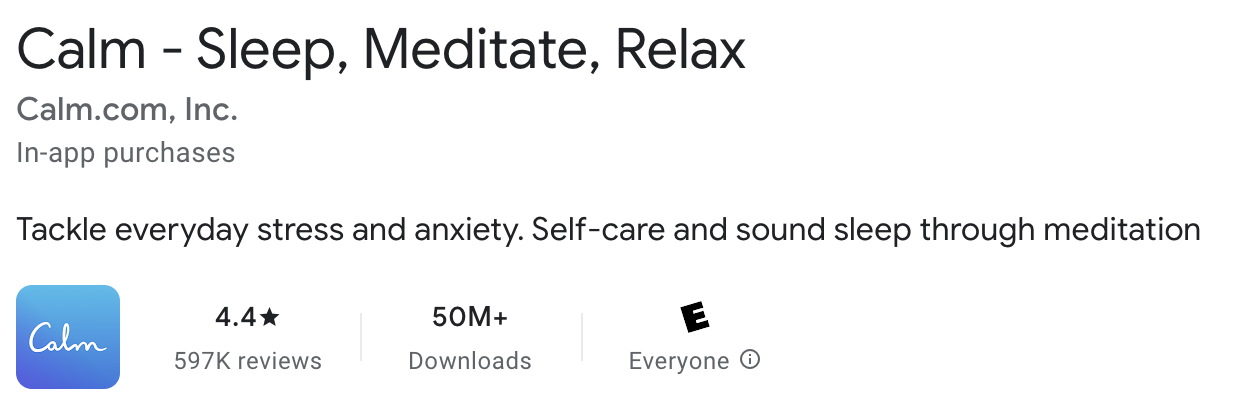
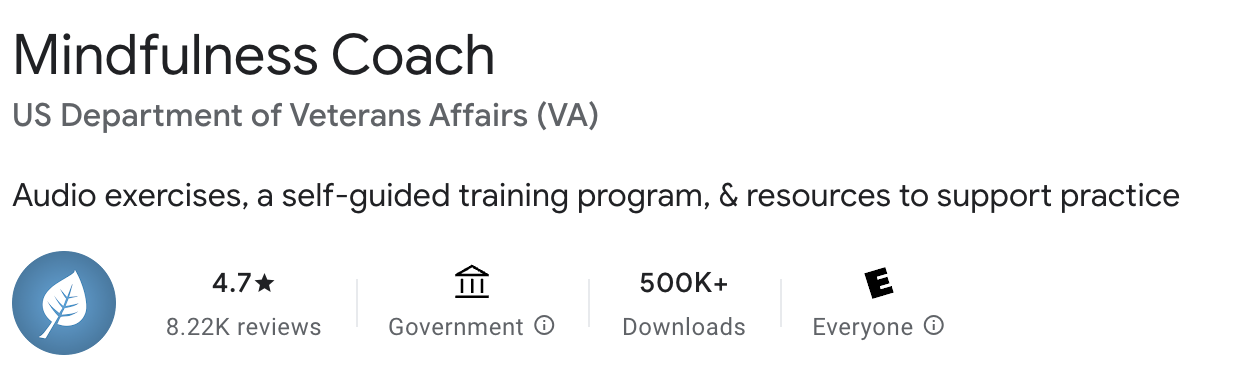
The core loop is pretty much the same - pick and play a guided meditation. As a free user, I found Calm under-delivers on its promise. The heavy handed onboarding and complicated product offering was not relaxing. I actually found Mindfulness Coach matched the expectation I had going in, with a no-frills solution that just works.
Before you get to the core loop, and whether you get there at all, couldn’t be more different.
Here is the hero text on the home pages:
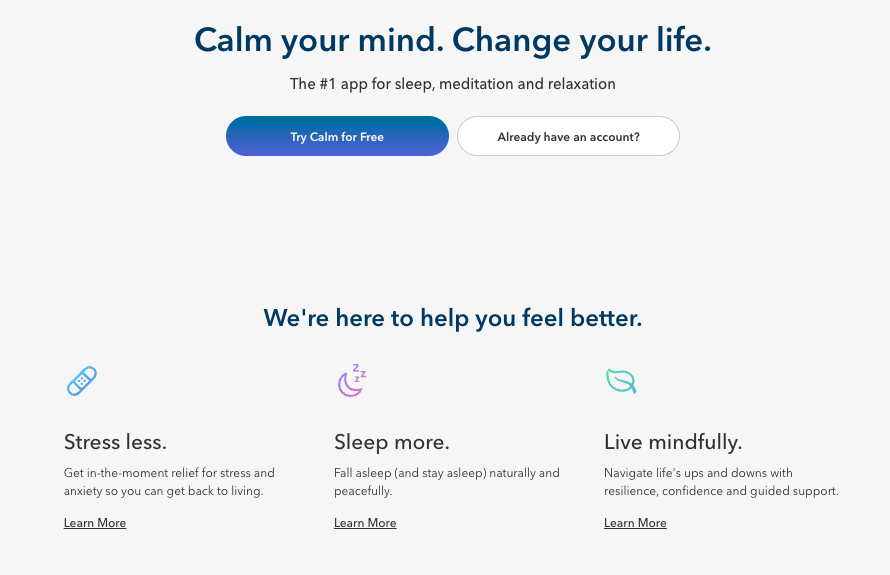
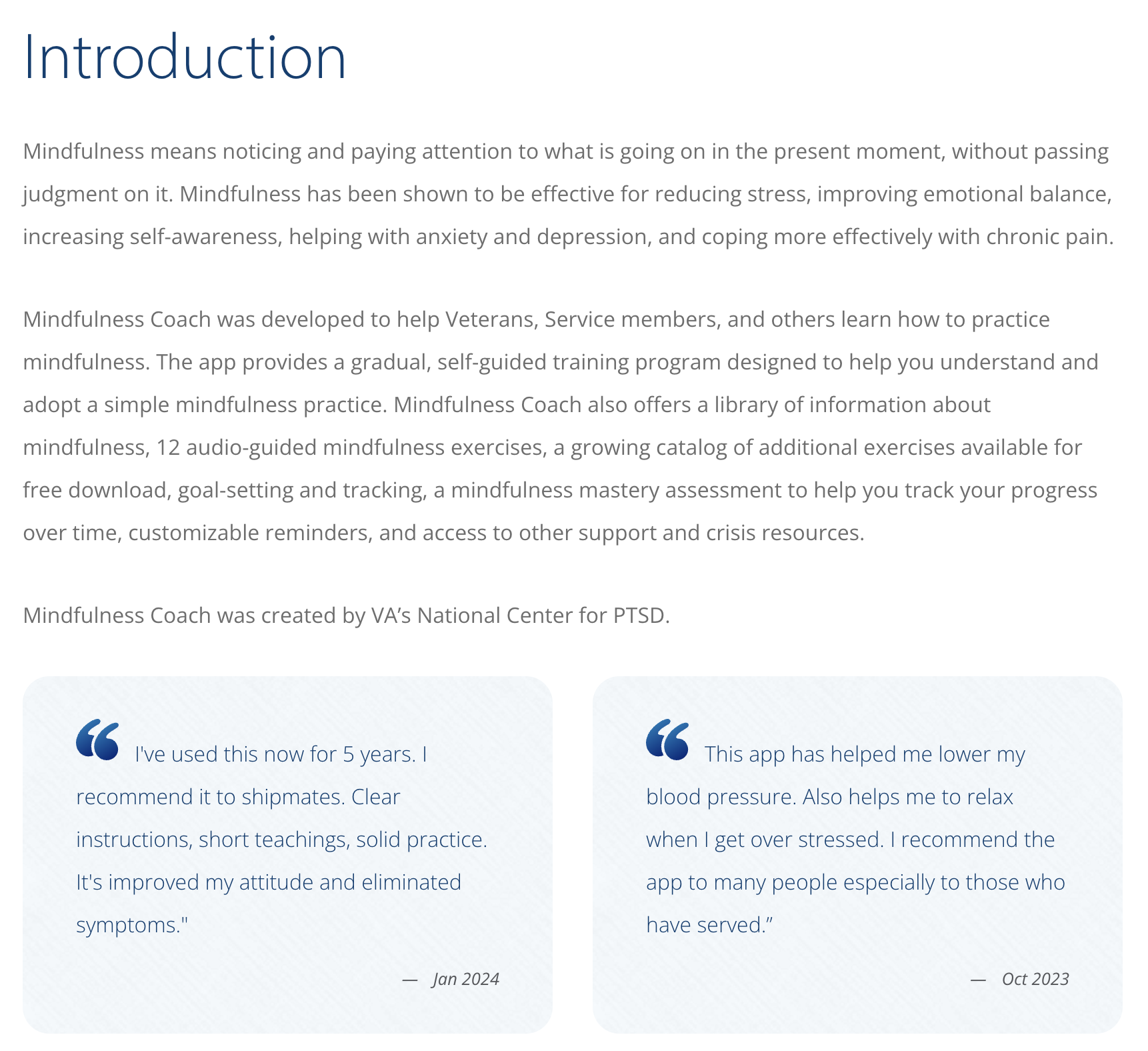
From this message, we can guess at the positioning.
| Calm | Mindfulness Coach | |
|---|---|---|
| User Perspective |
leads with emotional outcomes (why) Sleep more. Stress less. Sleep better. |
leads with a lecture (what) Understand mindfulness. Practise with structured lessons. |
| Who is it for? | Stressed people | Veterans and Service members |
| What does it do? | stressed → calm | Not meditating → mindful |
| Why is it better than the alternatives? | Easy, aspirational | Works for people like me |
‘Not meditating’ does not sound like a problem. Especially when the messaging starts with helping you understand what meditation is. If you don’t know what it is - how do you know you need it?
Practical tips & more resources
- April Dunford’s worksheet exercise may be a good place to start if you’re looking to evaluate and improve positioning yourself.
- When you’re seeing an ad for a product you use, reflect on it. Was the messaging on point? Especially if you are the target audience, when do you feel the aha moment?
- Sell me this pen: https://www.youtube.com/watch?v=iawLbvCyGKw (match the pen to what the user needs)
- Lenny’s podcast with April on product positioning https://www.lennysnewsletter.com/p/april-dunford-on-product-positioning
Post Image upscaled with ChatGPT, based on: More cookie, more happy. Walmart display, Theresa Robison on Pinterest